![HACE logo-Main[1]-Dec-02-2023-12-13-11-6287-AM](https://info.haceonline.org/hs-fs/hubfs/HACE%20logo-Main%5B1%5D-Dec-02-2023-12-13-11-6287-AM.png?width=3249&height=1403&name=HACE%20logo-Main%5B1%5D-Dec-02-2023-12-13-11-6287-AM.png "HACE logo-Main[1]-Dec-02-2023-12-13-11-6287-AM")
The Decisions That Make Belonging Real: 4 Takeaways from Chief DE&I Roundtable
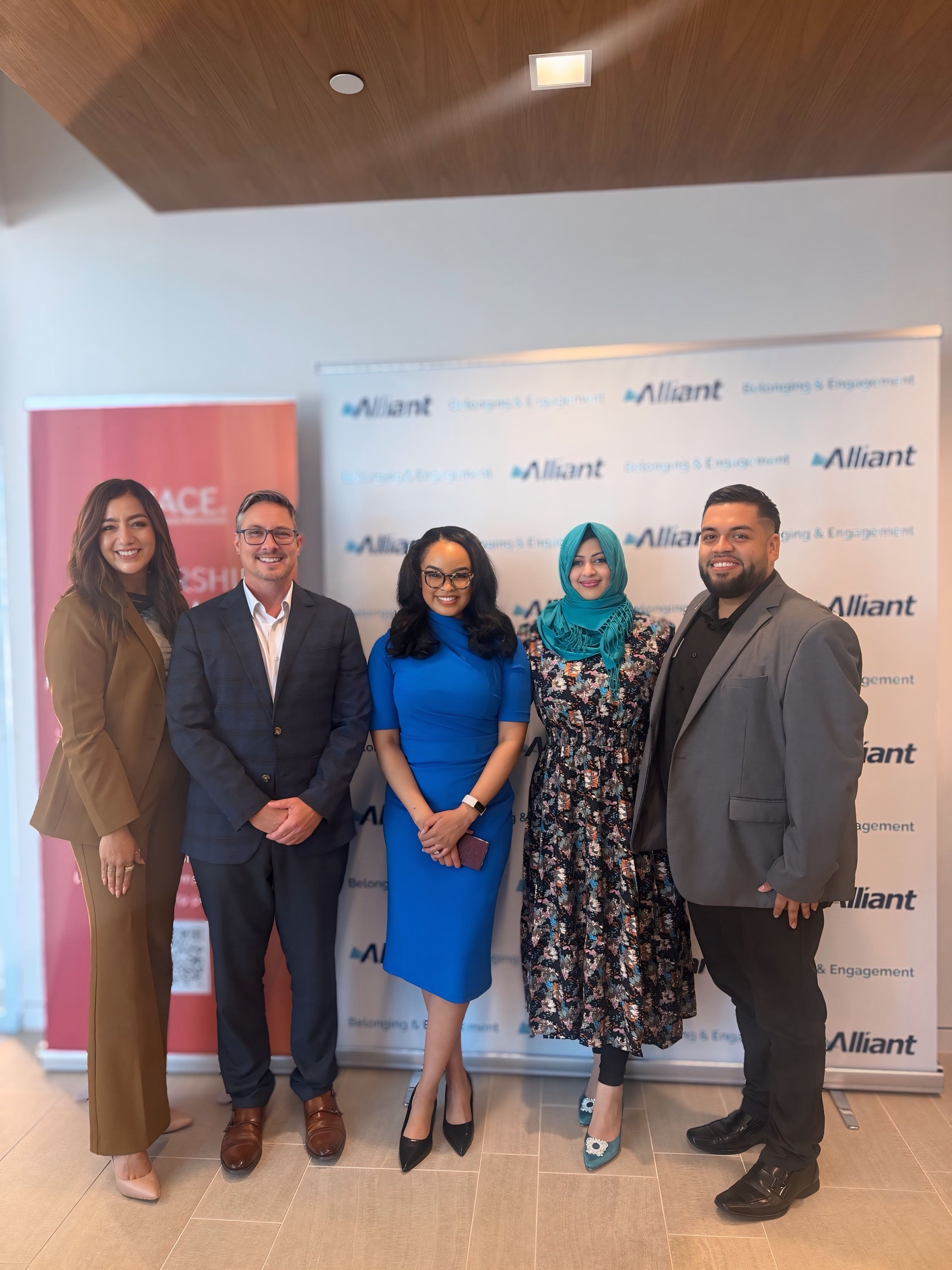
On October 2, the Hispanic Alliance for Career Enhancement (HACE) convened leaders at Alliant in Irvine, California, for its Chief Belonging Officer Roundtable. As organizations reconsider how they approach inclusion and demonstrate its value, one question remains essential: Are organizational commitments reflected in the decisions that shape employees’ careers?
For more than 20 years, HACE has worked to advance Latino professionals into leadership roles. Its mission recognizes that talent alone is not always enough. Employees also need access to sponsorship, visibility, development, and clear pathways to advancement.
The Fall Roundtable brought together experts and organizational leaders to explore four ways employers can turn their commitments into meaningful workplace change.
1. Make Access to Advancement More Equitable
HACE’s late-2025 survey of 394 Latino professionals found that 46% reported no access to mentorship or sponsorship at work, while 67% had never been offered culturally based leadership training.
These findings raise important questions for employers: Who has an advocate? Who receives high-visibility assignments? Who understands the unwritten rules of advancement? Access the full report here
External research reinforces the importance of career advocacy. McKinsey and LeanIn.Org’s Women in the Workplace 2025 report highlights the relationship between sponsorship and promotion, underscoring the importance of ensuring employees have access to relationships that support career growth.
Organizations must look beyond talent identification to examine whether their systems provide equitable access to the experiences and opportunities that prepare employees for leadership.
Key takeaway: Review who receives sponsorship, development opportunities, and assignments that make leadership potential visible.
2. Align Leadership Behavior with Organizational Values
In her presentation, Beyond the Playbook: What Actually Shapes Culture, Dr. Samantha Smith challenged leaders to consider: “Who gets promoted, and does the process match what we say we value?”
Culture is shaped not only by stated commitments but also by everyday decisions. Promotion criteria, performance reviews, stretch assignments, and recognition all signal which behaviors and people an organization values.
Key takeaway: Audit the decisions that influence advancement. If mentorship and inclusion are priorities, recognize and reward leaders who put those values into practice.
3. Adapt Programs Without Abandoning the Mission
Dru Levasseur, founder and principal of Dru Levasseur Consulting, offered a timely call to action: “Redesign, Don’t Retreat.”
Uncertainty can make organizations hesitant, but it can also create opportunities to improve. Leaders can revisit program design, identify barriers, prepare managers for difficult conversations, and seek appropriate guidance when navigating complex situations.
Key takeaway: Focus on what can be improved. Equip managers to act with confidence and ensure organizational commitments translate into everyday practice.
4. Measure Behavior Change, Not Just Participation
Aaisha Hamid, First Vice President of Belonging & Engagement at Alliant Insurance Services and Chief of Staff of the Alliant Insurance Foundation, posed a critical question: “Are people applying what they learned?”
Attendance and satisfaction scores offer useful feedback, but they do not necessarily demonstrate that development programs change behavior. Hamid proposed a 60-day behavior application rate as one possible measure of whether participants put their learning into practice.
For organizations looking to strengthen their evaluation practices, CIPD’s guidance on learning evaluation offers a framework for connecting development initiatives to workplace performance and measurable outcomes.
Organizations can also examine workforce trends, turnover costs, and potential client impact to better understand where their investments are making a difference.
Key takeaway: Build follow-up into development programs. Define the behaviors to be developed, measure whether they occur, and use the findings to improve future investments.
Turn Commitment into Action
Across the roundtable discussions, one message emerged: Belonging becomes real through the systems, behaviors, and decisions employees experience every day.
For DEI and belonging leaders, progress can begin with one concrete action in the next 30 days:
- Review a promotion process for barriers to advancement.
- Identify employees who lack access to sponsors or high-visibility opportunities.
- Prepare managers to navigate difficult conversations.
- Follow up with development program participants to understand what they have applied.
HACE convenes these conversations to help leaders learn from peers, strengthen organizational practices, and expand access to leadership opportunities.
Ultimately, the question is not simply whether an organization values belonging. It is whether its decisions make it possible for more people to contribute, grow, and lead.
When commitments are reflected in how organizations operate, they create more equitable pathways to leadership and a stronger foundation for the future.
Continue the Conversation with HACE
Inclusive research and thought leadership are an important part of the value HACE brings to its partners, helping organizations identify barriers, strengthen leadership pipelines, and expand opportunities for Latino professionals.
There are several ways to align with HACE’s mission, from investing in leadership development to engaging in conversations that shape the future of workplace inclusion. Here is an overview of our partnership opportunities.
Join HACE at the Spring 2027 Chief Diversity Officer (CDO) Roundtable, taking place during HACE’s National 45th Anniversary Summit. Connect with fellow leaders, exchange insights, and explore strategies for advancing Latino professionals and building more inclusive workplaces.